
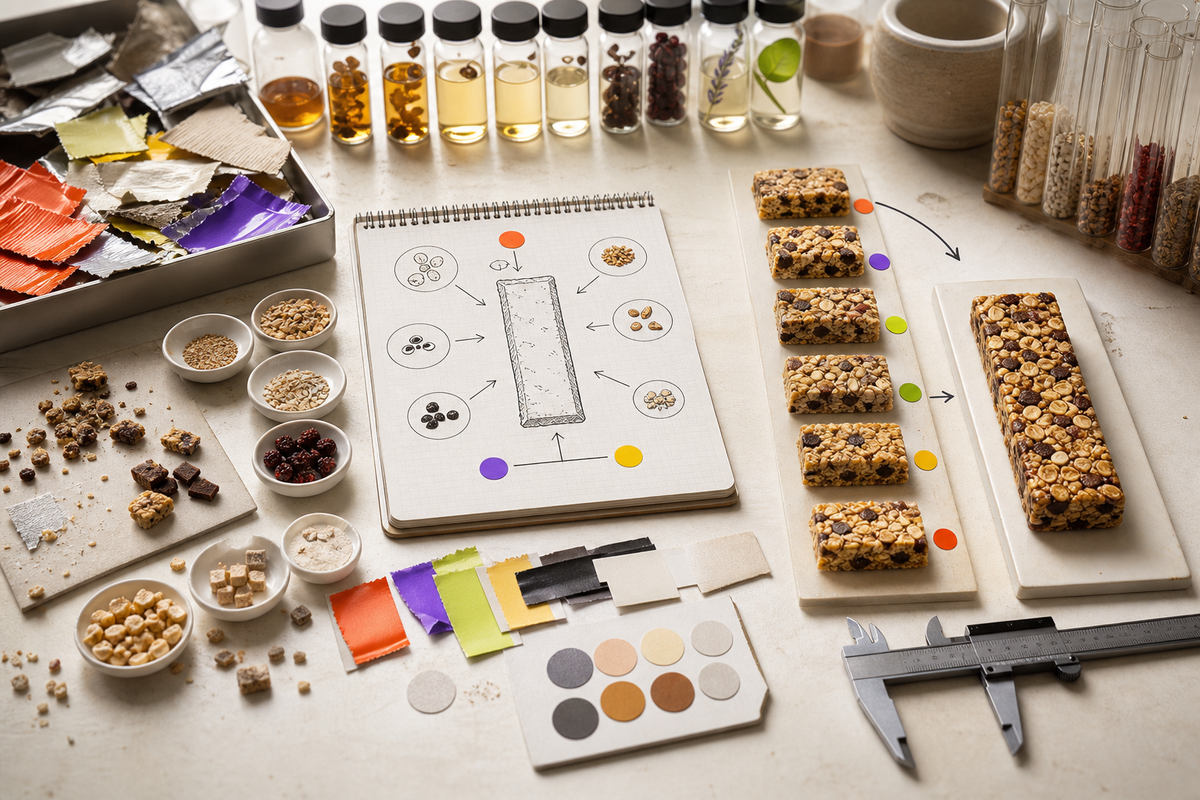
How do you turn “you know the one” into instructions another person can actually test?
You start by treating the memory as evidence of an experience—not as a complete formula.

Capture the moment
Where did people buy it? Who were they with? Was it a lunchbox item, road-trip stop, movie snack, freezer treat, or late-night convenience-store ritual? Occasion affects portion, packaging, price, and expectations.
Break the experience into clues
Describe the first impression, flavour sequence, sweetness, acidity, aroma, temperature, texture, sound, aftertaste, shape, size, and how the package opened and travelled.

Write targets, not poetry alone
“Bright citrus” becomes a direction only when paired with intensity, timing, bitterness, sweetness, and the texture carrying it. A good brief states priorities and acceptable trade-offs.
Make a small test and learn
A Recipe or controlled prototype tests the brief. Checkpoints, batch notes, tasting records, and one change at a time make the result informative even when it misses.
Nominate a favourite with the details that make your memory testable.